One-stop auto parts supplier
Engine Connecting Rod: Function, Common Problems, and Replacement Guide

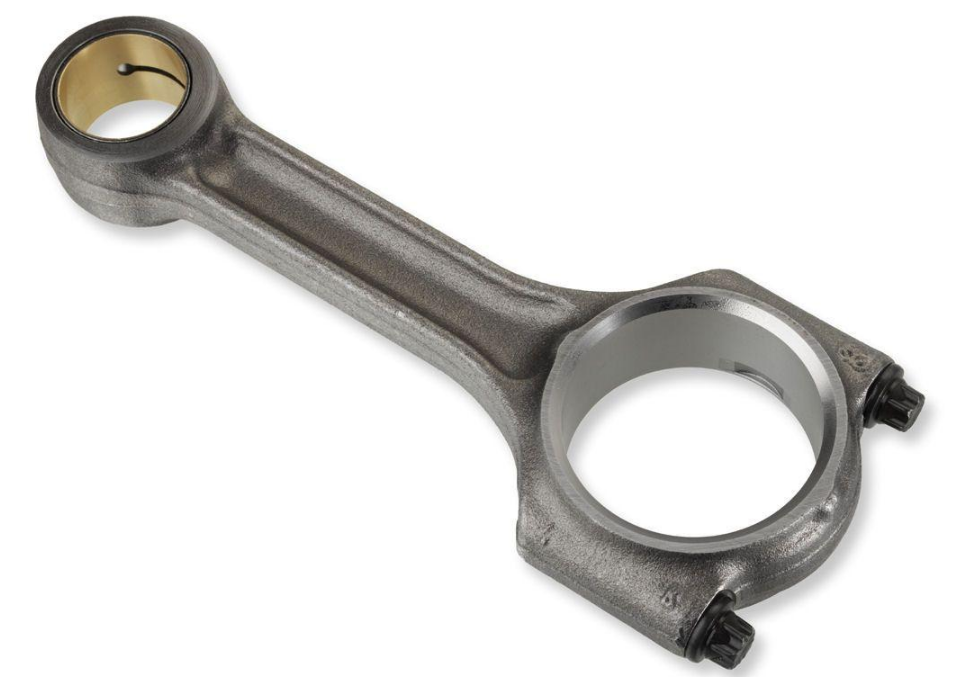
An engine connecting rod may look like a simple metal part, but it plays an important role in engine operation. It connects the piston to the crankshaft and transfers the force produced during combustion. Without a properly working connecting rod, an engine cannot run as designed.
For engine rebuilders, automotive parts distributors, and repair workshops, understanding connecting rods helps when selecting replacement parts and diagnosing engine problems.
In this guide, we explain how an engine connecting rod works, what causes it to fail, and what buyers should check before ordering a replacement.
What Does an Engine Connecting Rod Do?
An engine connecting rod, also called a con rod, links the piston to the crankshaft. During combustion, the piston moves up and down inside the cylinder. The connecting rod transfers this movement to the crankshaft, which converts it into rotational motion.
The connecting rod works under repeated compression and tension. It must also withstand changing loads as engine speed and combustion pressure vary.
Most connecting rods have three main sections:
- Small end: Connects to the piston through the piston pin, also called the wrist pin or gudgeon pin.
- Rod shank: Connects the small end to the big end and carries the loads between them.
- Big end: Fits around the crankshaft journal and usually uses a separate cap on conventional designs.
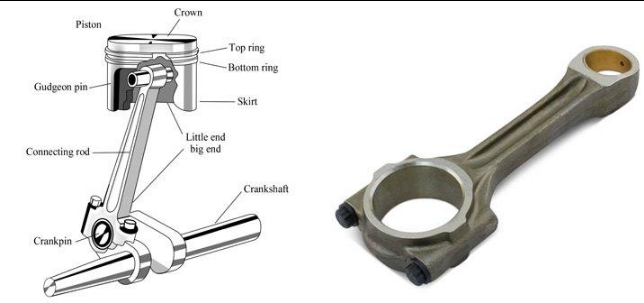
The rod’s dimensions, material, and machining accuracy all affect engine performance and durability. A replacement connecting rod must match the engine’s design and specifications.
Common Types of Engine Connecting Rods
Different engines use different connecting rod designs. Buyers should identify the correct type before placing an order.
1. Passenger Car Connecting Rods
Passenger car connecting rods are designed for gasoline or diesel engines in cars and light vehicles. Their dimensions and material depend on the engine design, power output, and operating conditions.
2. Diesel Engine Connecting Rods
Diesel engine connecting rods must withstand the loads produced by diesel combustion. They are used in passenger cars, light commercial vehicles, trucks, and other diesel-powered equipment.
3. Heavy-Duty Connecting Rods
Heavy-duty engines often operate for long periods under demanding conditions. Their connecting rods must meet the engine manufacturer’s requirements for strength, fatigue resistance, dimensions, and assembly.
When sourcing a connecting rod, do not rely on the engine brand alone. Check the engine code, part number, and relevant dimensions to confirm compatibility.
What Are the Common Signs of Connecting Rod Problems?
A damaged connecting rod can cause serious engine damage. However, some symptoms may come from the connecting rod bearing, crankshaft, or other internal engine components.
1. Knocking Noise from the Engine
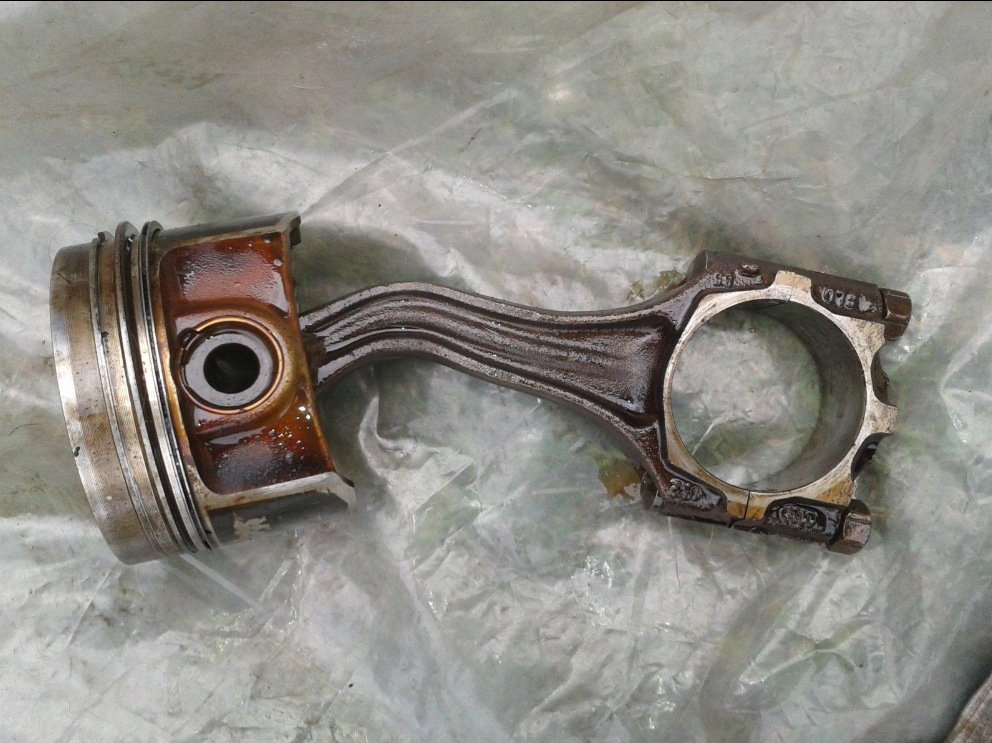
A deep metallic knocking sound may indicate excessive clearance at the connecting rod bearing or damage to the crankshaft journal. The noise may change with engine speed or load.
Do not assume that every engine knock means the connecting rod itself has failed. A proper inspection is necessary to identify the cause.
2. Metal Particles in Engine Oil
Metal particles in drained engine oil or the oil filter may indicate internal wear. The source could be the connecting rod bearing, crankshaft, or another engine component.
If you find metal debris, inspect the engine before installing new parts. Replacing only the damaged component may not solve the underlying problem.
3. Low Oil Pressure
Low engine oil pressure can reduce lubrication at the connecting rod bearings. If the oil film becomes insufficient, metal surfaces may contact each other and wear quickly.
Check the oil level, oil condition, pump, filter, and lubrication passages when diagnosing this problem.
4. Bent or Broken Connecting Rod
A bent or broken connecting rod can result from severe mechanical stress, liquid entering a cylinder, excessive engine speed, lubrication failure, or other internal damage.
Stop operating the engine if you suspect a serious internal failure. Continued operation may damage the piston, crankshaft, cylinder block, and other components.
What Causes Connecting Rod Failure?
Connecting rods are built to withstand repeated loads, but several conditions can lead to damage.
Poor lubrication: Low oil pressure, insufficient oil supply, or contaminated engine oil can damage the connecting rod bearings and crankshaft journals.
Bearing failure: A worn, damaged, or incorrectly installed bearing can affect the clearance between the connecting rod and crankshaft.
Engine overspeed: Excessive engine speed increases inertial loads on moving parts. Operating beyond the engine manufacturer’s limits can damage the connecting rod.
Hydrolock: If liquid enters a cylinder in sufficient quantity, the piston may be unable to complete its normal movement. The resulting force can bend a connecting rod.
Incorrect installation: Wrong clearances, improper bolt tightening, damaged fasteners, or incorrect parts can cause serious engine problems.
Material fatigue or manufacturing defects: Repeated loading can cause fatigue damage. Material defects or poor machining may also contribute to premature failure.
Finding the root cause is essential before fitting a replacement connecting rod. Otherwise, the new part may suffer the same problem.
For buyers and technicians who want to learn more about engine component design and fatigue resistance, SAE International’s technical research library offers additional engineering resources.
Connecting rod damage may result from repeated stress, excessive loads, or other mechanical problems. For a more detailed technical discussion, read this research article on connecting rod failure analysis.
What Should You Check Before Replacing a Connecting Rod?
Choosing the correct engine connecting rod requires more than matching its general appearance.
Before ordering, check these details:
- Part number: Compare the original part number with the replacement reference.
- Engine model: Confirm the engine code, displacement, and application.
- Centre-to-centre distance: Check the distance between the small-end and big-end centres.
- Small-end and big-end dimensions: Verify bore sizes, widths, and other critical measurements against the engine specifications.
- Material and design: Confirm that the replacement matches the required engine application.
- Connecting rod bolts and bushings: Check whether these components are included or need to be ordered separately.
- Quantity: Confirm the number of rods required for the repair or engine rebuild.
Always follow the engine manufacturer’s service data for dimensional tolerances, bearing clearance, and bolt tightening procedures. Do not use a generic specification for every engine.
For distributors and repair businesses, accurate part-number and fitment checks can also help reduce incorrect orders and unnecessary returns.
How to Choose a Reliable Connecting Rod Supplier
Price matters when purchasing automotive engine parts, but it should not be the only consideration.
A reliable connecting rod supplier should provide clear product identification and useful technical information. Buyers should ask about the following points:
Product identification: Can the supplier confirm the part number and intended engine application?
Dimensional consistency: Can the supplier provide drawings or inspection data for the critical dimensions?
Material information: Can the supplier confirm the material and manufacturing specifications required for the application?
Order support: Can the supplier handle your required quantity and provide clear packing and shipping information?
Communication: Can the supplier respond clearly to questions about fitment, product details, and repeat orders?
For aftermarket parts distributors, these checks are especially useful when sourcing multiple engine references or building a long-term supply relationship.
Find Automotive Engine Parts at RJT PARTS
RJT PARTS supplies aftermarket parts for automotive and engine repair applications. We support buyers who need replacement components for maintenance, overhaul, and parts distribution.
When sourcing an engine connecting rod, please provide the original part number, engine model, and required quantity. If available, send a photo of the original part or its identification marks. This information helps us review your requirements before quoting.
You can also explore our [Engine Parts] category for related replacement components. Depending on the engine application, buyers may also need to check the [Camshafts] and [Crankshaft] product ranges during an engine overhaul.
Looking for a connecting rod for your engine? Contact RJT PARTS with your part number and application details. Our team can review your inquiry and help you check the available replacement options.
Frequently Asked Questions
What is the main function of an engine connecting rod?
The connecting rod links the piston to the crankshaft and transfers the piston’s reciprocating movement into crankshaft rotation.
Can a bent connecting rod be repaired?
Repair decisions depend on the engine manufacturer’s service requirements and the extent of the damage. A connecting rod with suspected bending or structural damage should not be reused without an approved inspection procedure.
Does a knocking engine always have a bad connecting rod?
No. Engine knocking may come from worn connecting rod bearings, crankshaft damage, piston problems, or other sources. Proper diagnosis is needed before replacing parts.
What information do I need to order a replacement connecting rod?
Provide the part number, engine model, application, required quantity, and any available dimensions or photos. Confirm compatibility before placing the order.
Should I replace the connecting rod bearing at the same time?
If the engine is being overhauled or the bearing shows wear or damage, inspect the bearing and crankshaft journal. Replace components according to the engine manufacturer’s service instructions and measured clearances.