One-stop auto parts supplier
Precision and Profit: Navigating the Aftermarket Fuel Injector Landscape in 2026

The aftermarket fuel injectors has evolved from a “budget alternative” to a sophisticated sector driven by high-precision engineering and the necessity of meeting global emission standards like Euro 7 and China 6. For professional traders and fleet managers, understanding the balance between cost-efficiency and technical reliability is the key to maintaining a high repurchase rate and long-term engine health.
latest global diesel emission standards and fuel injection technology
1. The Market Shift: Why Aftermarket Fuel Injector is Dominating
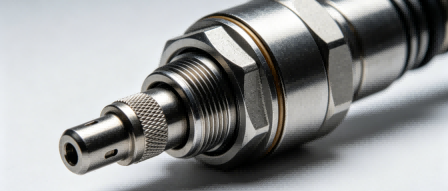
As of 2026, the global fuel injector market is seeing a structural transformation. While the rise of electric vehicles is cooling new diesel engine production for passenger cars, the legacy diesel fleet remains massive. This “installed base” of hundreds of millions of vehicles has made the aftermarket the primary revenue floor for the industry.
- Cost Efficiency: Quality aftermarket injectors typically cost 20% to 50% less than their OEM counterparts.
- Availability: For older or discontinued engine models (like the Mercedes OM355 or early Cummins ISF series), aftermarket suppliers often provide better availability than factory channels.
2. The Core Categories: New vs. Remanufactured-Aftermarket Fuel Injector
In the aftermarket, “quality” is not a single standard. The market is split into two primary tiers:
- Brand New Aftermarket: These are reverse-engineered units. While the most affordable, they carry the highest risk of inconsistent flow rates or poor spray patterns. Professional sellers look for “Industrial Grade” units that use high-strength alloys to avoid premature failure.
- Remanufactured (OE-Style): Often the “gold standard” for reliability. These use genuine factory cores that are ultrasonically cleaned, backflushed, and rebuilt with new internal components. When calibrated on a flow bench, they offer performance virtually identical to OEM parts.
3. Technical Advancements in 2026
The technical bar for injectors has never been higher. Modern common rail systems now operate at pressures exceeding 30,000 PSI.
- Piezoelectric Tech: Many aftermarket providers now offer piezoelectric injectors, which allow for faster switching times and multiple injections per combustion cycle, significantly improving fuel economy and reducing noise.
- Alternative Fuels: With the industry’s shift toward multi-fuel mobility, we are seeing the first aftermarket kits designed for Methanol (M100) and Ethanol (E100) injection, allowing older fleets to adapt to greener fuel standards.
4. Avoiding the “Double Labor” Trap
The greatest risk in the aftermarket is the cost of failure. Replacing a fuel injector is labor-intensive; if an inferior part fails, the cost of re-diagnosis and re-installation often exceeds the initial savings.
How to spot a high-quality aftermarket supplier:
- Laser Etching: Genuine quality units will have clear part numbers (e.g., $0445110$ series) and manufacturer branding.
- Flow Matching: A reputable supplier will provide data showing that all injectors in a set have uniform flow rates (within a 2% variance).
- Structured Packaging: Given the precision of the nozzle tips, look for suppliers who prioritize moisture-proof and impact-resistant industrial packaging to prevent damage during transit.
5. Strategy for Success
For SOHO trading companies and specialized exporters, the path to high repurchase rates lies in Technical Transparency. Instead of competing solely on price, focus on providing detailed cross-reference tables and “human-toned” technical advice. By verifying compatibility with specific engine codes—like the VW Delivery or Mercedes Axor—you solve the buyer’s biggest pain point: the fear of the wrong part.
Final Insight: In 2026, a fuel injector isn’t just a part; it’s a precision instrument. Treating it as such in your marketing and quality control is what separates market leaders from generic resellers.